If you run a small business, you already know that getting noticed in your local market isn’t just about having a great product — it’s about being visible where your customers actually are. Digital Out-of-Home (DOOH) advertising does exactly that. It puts your brand in front of people as they go about their day, on the roads they drive and in the neighborhoods they frequent. This article walks you through what DOOH is, why it works for local businesses, how to budget for it, and when it makes more sense than paid social campaigns.
What Is Digital Out-of-Home (DOOH) Advertising?
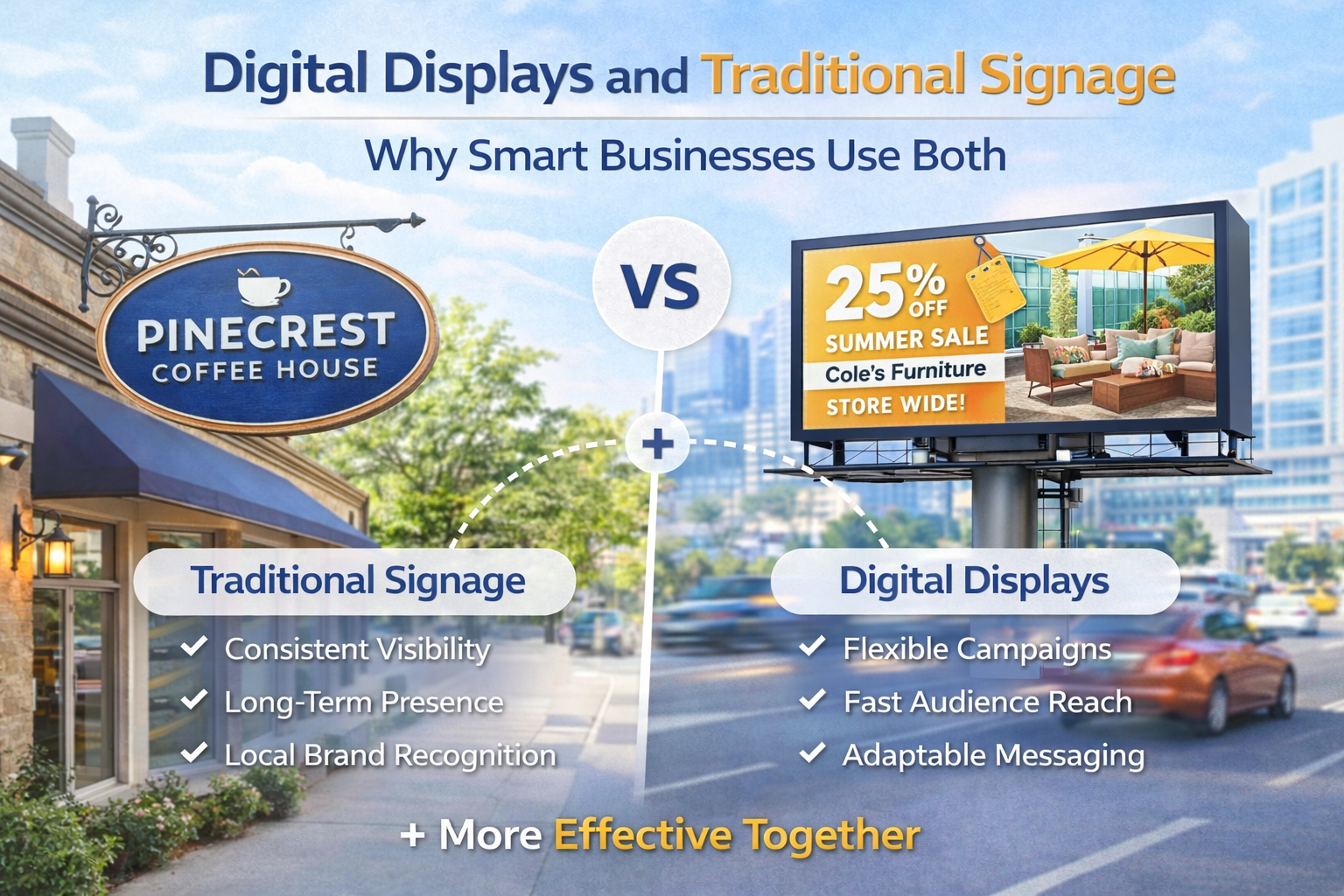
DOOH refers to digital display screens in physical, high-traffic environments — highways, transit corridors, commercial districts, and retail centers. Unlike traditional static billboards, DOOH placements are flexible and efficient. They rotate multiple advertisements, allow scheduled campaign windows, can be updated without reprinting, and operate within defined geographic zones.
In practical terms, you secure time on a digital display within a specific area. Your ad runs for an agreed duration, seen by real people moving through your market — not just users scrolling past it on a phone screen.
Why Local Visibility Still Matters
Digital targeting has come a long way, but physical visibility still drives purchasing decisions in ways that online ads can’t fully replicate. Consider a local HVAC company that recently expanded into a new neighborhood. Rather than waiting months for organic search rankings to build, they ran a two-week DOOH campaign on the main commuter routes through that area. Within days, calls were coming in from people who had “seen them around.” They weren’t just a business that showed up online — they felt established.
Repetition builds recognition. People travel consistent routes. A display positioned along a primary corridor generates repeated exposure over time. Unlike a social media post that disappears in seconds, a physical display occupies real, unavoidable visual space.
Physical presence signals stability. Businesses visible in structured advertising environments are perceived as established operators. For service providers, medical practices, professional firms, and local retailers, that kind of credibility matters.
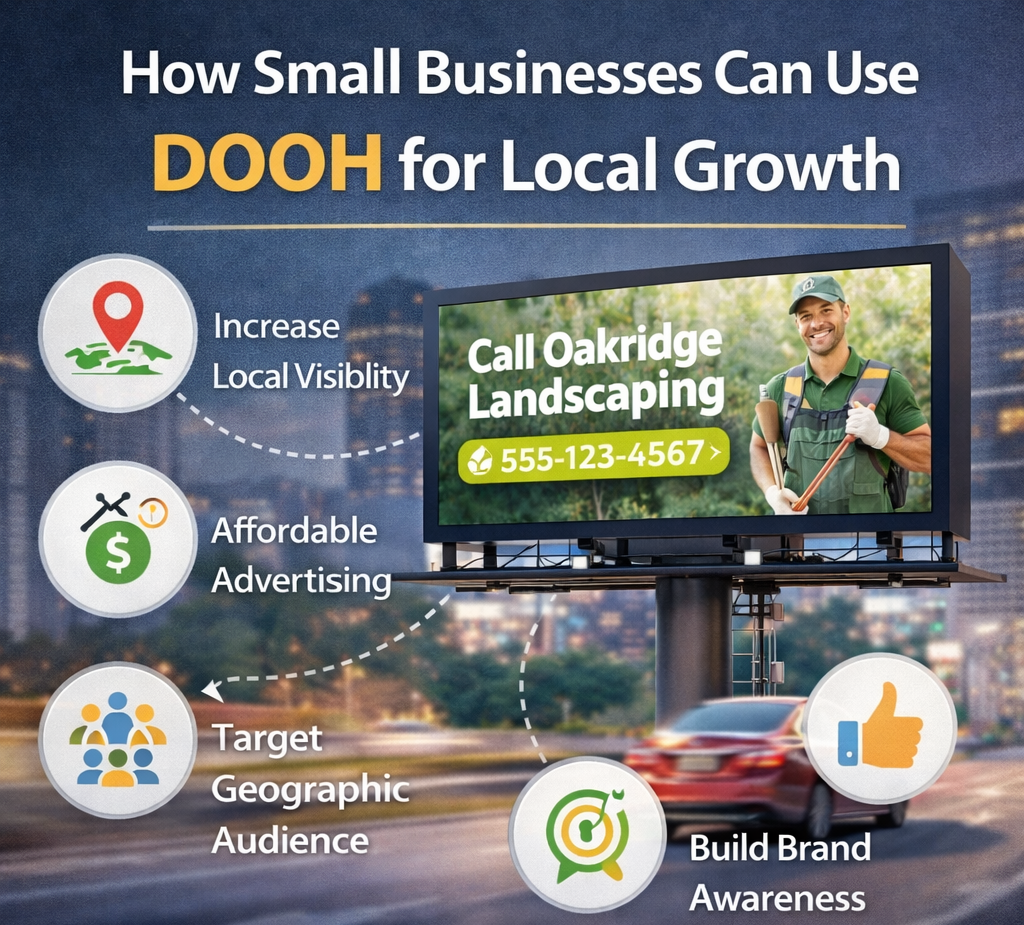
Geographic alignment improves efficiency. Most small businesses operate within a defined service area. DOOH lets you concentrate your spend exactly where you work — not scatter it across a broad digital audience that may never walk through your door.
Budgeting for DOOH Campaigns
DOOH doesn’t require a national budget — but it does require a plan. Here’s a straightforward framework to make your spend work harder.
1. Start with a clear objective.
Are you entering a new market? Promoting a seasonal offer? Supporting a grand opening? Defining your goal before you spend a dollar keeps everything else focused. Campaigns without a defined purpose are hard to evaluate — and hard to improve.
2. Run a controlled test first.
Start with a one or two-week placement to gauge response before scaling. Look at inquiry volume, branded search activity, direct traffic trends, and any local engagement signals. Scale based on what you observe, not what you assume.
3. Concentrate your placement.
A few high-impact locations will outperform many low-traffic ones. Focus on major commuter routes, business districts, areas near competitors, and zones close to your physical location. Frequency within a defined audience produces stronger recall than broad distribution.
4. Integrate with your existing digital presence.
DOOH works best when your website, search visibility, and brand identity are already in good shape. When someone sees your billboard on their commute and later searches for you online, consistency between those touchpoints is what converts curiosity into a call.
Creative Standards for Effective DOOH Campaigns
Digital billboards give you seconds to make an impression. Great DOOH creative isn’t complex — it’s disciplined.
Keep it simple. One primary message, minimal copy, clear brand identification, and a direct call-to-action. Anything more reduces comprehension at speed.
Prioritize legibility. Large typography, high contrast colors, clear spacing. Your ad needs to be readable from a distance, from a moving car, in varying light conditions.
Make the CTA direct and unambiguous. “Visit [BusinessName].com,” “Now Serving [City],” or “Schedule Today” — short, confident, clear. Vague messaging weakens response.
Stay consistent across channels. Your DOOH placement, website, social presence, and printed materials should all look and feel like the same brand. Inconsistency fragments recognition and undermines the investment you’re making in visibility.
When DOOH May Be the Better Choice Over Paid Social
Paid social has its place, but it’s not always the right tool. DOOH tends to outperform when:
You need broad geographic awareness quickly — such as a grand opening or market expansion — and geographic concentration matters more than demographic segmentation.
Digital ad costs are climbing — in competitive industries, bidding environments can erode efficiency. Physical display placements operate in a different attention ecosystem and aren’t subject to the same auction dynamics.
You want to project authority and scale — large-format digital displays convey operational maturity in a way that a sponsored post simply can’t.
You’re running a multi-channel strategy — DOOH often amplifies digital efforts, increasing branded search behavior and improving performance of retargeting campaigns.
A Simple Implementation Framework
If you’re ready to move forward, here’s a straightforward approach:
Define measurable objectives before you spend anything.
Select geographically aligned placements within your actual service area.
Launch a controlled short-term campaign to test and learn.
Monitor performance indicators — inquiries, branded search, direct traffic.
Refine creative and placement based on what’s working, then scale.
Ready to Get Your Brand Seen?
DOOH isn’t complicated to get started with — and for local businesses trying to build a real presence in their market, it can be one of the most cost-effective visibility tools available. The businesses that do it well aren’t the ones with the biggest budgets. They’re the ones with clear objectives, smart placement, and consistent creative.
At Black Cellar Market, we make it straightforward. We’ll help you identify the right placements for your area, structure a campaign that fits your budget, and track results so you know exactly what’s working. No guesswork, no wasted spend.
If you’re ready to put your brand in front of your neighborhood, explore our Digital Display services and let’s build something that works for your business.